Showing posts with label the politics of language. Show all posts

Sunday, August 12, 2012

the politics of language...

language has been a lot on my mind lately - it's always been important to me - but recently, sadly, sexist language has been creeping into my workplace and making 55-60% of the workforce invisible...

apparently the womyn are no longer going to be expected to work on desk anymore - we’re now going to ‘man’ the new work stations (known as the pods) - and during some 'it' maintenance we were encouraged to use the fax or means other than email ‘to communicate with your brethren’… i’m not man, nor am i brother (or member of a male religious sect) – so when did we cease to be noticed, cease to be equal members of the workforce? having offered the option of ‘staffing the pods’ weeks before when we had an 'it' meeting, i was pleased to see an email to all staff with the subject line of ‘how we staff the pods at…’ – pleased that is until i read the body of the message where ‘manned’ was the only term used… so disappointing, frustrating, and downright depressing (of course my first reaction was to be really pissed off!)…

as for the ‘communicate with your brethren’ email that came out on my day off, i was happy to see a (male) colleague had emailed back with a very simple, but, to me, powerful rebuke in 3 words - ‘and the sisteren’ – yay, there was someone else who understood the inherent exclusion in this sexist language, an actual thinker… i emailed all staff the next day with a link to unesco’s 1999 guidelines on gender neutral language – perhaps a seed of enlightenment has been sewn… i received an email apology after that - 'apologies fellow earthling' - i'm proud to be called earthling - but fellow? according to the online etymology dictionary fellow has been "used familiarly since mid-15c. for "man, male person"... guess he just didn't get the point - colleague would have been quite adequate...

sherryl kleinman, who teaches a sociology course on gender inequality in America, wrote  an article - Why Sexist Language Matters - and states...

“…both women and men in my classes have the most trouble understanding - or, as I see it, share a strong unwillingness to understand - sexist language.

I'm not referring to such words as "bitch," "whore" and "slut." What I focus on instead are words that students consider just fine: male (so-called) generics. Some of these words refer to persons occupying a position: postman, chairman, freshman, congressman, fireman. Other words refer to the entire universe of human beings: "mankind" or "he." Then we've got manpower, manmade lakes and "Oh, man, where did I leave my keys?" There's "manning" the tables in a country where children learn that "all men are created equal"…

… male-based generics are another indicator -- and more importantly, a reinforcer -- of a system in which "man" in the abstract and men in the flesh are privileged over women… It's no accident that "man" is the anchor in our language and "woman" is not.”  read more here
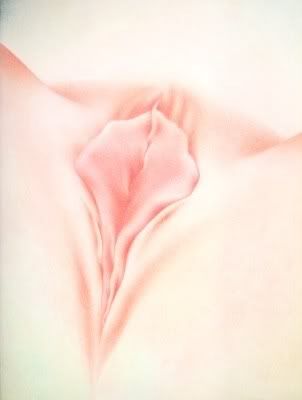
 intimate art of christina camphausen


alas, another sexist comment from another forum – a comment on an article about the horrors of the brutal fur trade, along the lines of "who are the cunts committing these atrocities" - wasn’t something I was expecting to read… i’m never impressed when my female anatomy is attacked, i don’t appreciate cunt being used as a derogatory term - see my previous post 'what's in a word' – it’s a beautiful word, and i, along with many womyn, reclaimed it back in the 70s - we embraced our womonhood, viewed our genitalia as beautiful, not something to be used as an abusive, derogatory term to describe those seen as despicable – this abuse of our bodies only helps maintain fear and hatred of them, while reinforcing poor body image and lack of self esteem in many womyn and girls… after explaining my position, i did get an apology for the context in which this person used cunt – perhaps he is open to questioning and changing his use of sexist language…

it’s no surprise then that our language is also speciesist…

“Speciesism and sexism clearly often operate together and in tandem, with women and nonhuman animals depicted as objects to be controlled, manipulated, and exploited. Thus, when men describe women as “cows, “ “bitches, “ “(dumb) bunnies,” “birds,” “chicks,” “foxes,” and “fresh meat” and their genitalia as other species, they use derogatory language, essentially to relegate both women and animals to the inferior statuses of “less than male” and, even, “less than human.” from ‘on human-nonhuman relations, a sociological exploration of speciesism’…

according to joan dunayer, author of ‘animal equality: language and liberation’ (among other titles) in her article ‘on speciesist language' - "A noun is a person, place, or thing," we obediently recite as children. What, then, are nonhuman animals? They aren't people or places, so - convention tells us - they must be things. Current English usage is speciesist. It glorifies the human species and belittles all others. Just as sexist language demeans women and excludes them from full consideration, speciesist language demeans and excludes nonhuman animals. When we consign other animals to the category thing, we obscure their sentience, individuality and right to autonomy…

… Every sentient being is a someone, not a something. By concealing this truth, speciesist language sanctions cruelty. Soon, I hope, children will learn, "A noun is an animal, place, or thing." With non-speciesist language, we can teach respect for all creatures. Just, compassionate words can help free our wordless kin.”

one of the most articulate, expressive, inspiring, political articles i have read lately is ‘liberate your language’ by vegina, on her blog vegina: musings from a feminist vegan rabble-rouser

“Through slang terms, idioms, insults, and standardized grammatical constructs, language reflects current social inequalities. It is packed with the vestiges of a culture’s history of domination, exploitation, and discrimination. In this way, language not only reflects inequality but also has the potential to oppress. In using problematic language, we reinscribe abuses and inequalities. However, by simply not using such language, we can free our own words of exploitation, forcing others to confront these issues when they hear us speak.

In this post I will focus on how language oppresses (and how we can liberate that language) as it applies to nonhuman animals and speciesist ideology. Importantly though, as I will describe below, it is impossible to discuss speciesist language without also discussing racist and sexist language, as they are all interlinked by a prevailing structure of inequality that operates within most institutions, belief systems, governments, and cultures globally.

Language oppresses in various ways. In relation to animals, the most notable ways that language reinforces and solidifies inequality is through pronouns, the use of “mass terms,” inaccurate language, derogatory terms/insults, and culturally specific idioms and adages...” i urge everyone to read vegina's wonderful article...

another passionate writer on this topic is carol j adams, author of ''the sexual politics of meat" and "the pornography of meat"... as an article written by her is referred to in vegina's post i will simply acknowledge her here - there's probably enough in this post to absorb already... 


Monday, October 17, 2011

another altered meaning…

feminine… mid-14c., "of the female sex," from O.Fr. femenin (12c.) "feminine, female; with feminine qualities, effeminate," from L. femininus "feminine" (in the grammatical sense at first), from femina "woman, female," lit. "she who suckles," from base of felare "to suck, suckle" (see fecund). Sense of "woman-like, proper to or characteristic of women" is recorded from mid-15c. The interplay of meanings now represented in female, feminine, and effeminate, and the attempt to make them clear and separate, has led to many coinages: feminitude (1878); feminile “feminine” (1640s); feminility “womanliness” (1838); femality (17c., “effeminacy;” 1754 “female nature”). Also feminality (1640s, “quality or state of being female”), from rare adj. feminal (late 14c.), from O.Fr. feminal. And femineity “quality or state of being feminine,” from L. femineus “of a woman, pertaining to a woman.” ... from online etymology dictionary

definitely a female word - ‘of the female sex’ - therefore you would assume that no womon can fail to be feminine, no matter what she looks like, how she dresses or how she asserts herself…

so when did it become 'watered down' and interchangeable with ‘ladylike’ (a word i don't 'subscribe' to - you can read my post ‘this womon ain’t no lady’ here) – hmm, it appears to have started changing in the 15th century when we see the words "proper to .. women" creep into the definition... a time when womyn's worth and their roles were being redefined by a misogynistic, patriarchal culture to keep them subservient and silent - you know, seen but not heard… 

because if you were heard, that meant you had opinions of your own - you may just have been a strong womon... and strong womyn were to be feared...

yes, you may have picked up that the 'shift' in the meaning appears to coincide with the growing fervour of the european witch hunts and hatred of all things female, the gathering momentum with the publication of the malleus malificarum in 1487 and the spreading of fear into england...

and henry (yeah, that one - the 8th!!) 'fed the growing fear' when he accused anne boleyn of witchcraft, infidelity and incest - as adultery was considered treason for a queen it was also a very expedient way to dispose of a womon who'd only 'produced' a daughter - elizabeth - but no sons!... 6 years after her execution henry passed the witchcraft act of 1542 against 'conjurations and wichescraftes and sorcery and enchantmentes.'... the act was repealed in 1547 under edward's reign (but he was only 9 so the regency council was making all the decisions at this time!)

alas, repeal only lasted until the elizabethan witchcraft act was passed during elizabeth's reign in 1562 - sad considering her own mother had been accused of being a witch... but then lizzie had very powerful men with vested interests surrounding and advising her, and she inherited (and maintained) an extremely misogynistic 'kingdom'...  "during the Elizabethan era men were all-powerful. Women had few rights and were expected to obey men. Elizabethan women totally relied on the male members of the family. Society and the culture of England was changing. The convents had been closed. The number of poor was increasing and people were far less charitable. Old, poor, unprotected women needed to be supported - and this was resented by other Elizabethans."

so womyn were either witch - non-submissive, old, poor or without male support in a male dominant society - or submissive - totally downtrodden in a male dominant society - the new vision of feminine...

"the english language has been literally man made and it is still primarily under male control, this monopoly over language is one the means by which males have ensured their own primacy, and consequently have ensured the invisibility or 'other' nature of females, and this primacy is perpetuated while women continue to use, unchanged, the language we have inherited" ... excerpt from dale spender's 'man made language'

what's sad now is when I hear womyn labelling themselves with this diminished patriarchal sense of the word as though being a submissive ‘decoration’ is something to aspire to... and then there's the judgement of others - i'm sure you've all heard someone comment on the perceived feminine or unfeminine 'quality' of someone  - maybe you've heard something similar to "she's as rough as ..., so unfeminine" - or the seal of approval that goes along the lines of "doesn't she look feminine in that"?

perhaps next time you hear that you might think 'hey, she's female - she can't be anything but feminine!' - because to be feminine is to be female... to be female is to be feminine - and strong, and loud and proud - it's a womon-centred word... it's a word worth reclaiming...


Saturday, August 27, 2011

old superstitions die hard…


"fingers crossed"…

it rolls off everyone’s tongue so easily… i grew up with the "fingers crossed" saying when hoping for something to turn out well, to have a positive outcome… but ever wondered where it came from? i hadn’t thought about it significantly before - but then i went to use it earlier… all of a sudden i was intrigued by 'whose' superstition it was based on and had to check it out…


tt’s not so easy to discover the origin though – so here’s a few of the ‘origins’ I came across…


purely christian...

"The theory of a Christian origin of crossing your fingers is based on early periods in the religion's history. During these early times, Christianity was an outlawed religion and the disciples of Christ usually formed a secret society. To protect the identity of the sect's followers, secret hand signs were developed so the members could recognize each other." http://www.wisegeek.com/what-is-the-origin-of-crossing-your-fingers-for-luck.htm


majorly christian...

“Crossing fingers - Generally this means "wishing for good luck or fortune". Another interpretation could be seen as "here's hoping". The gesture probably has pagan / Christian origins where the gesture was believed to ward off evil. As such, folklore believes that crossing the fingers when telling a lie somehow offsets the evil of the lie... Some historians believe that crossing your fingers is a hidden or secret way of making the Christian sign of the cross - a sure-fire way of defeating demons. As a gesture it has both positive and negative symbolism. Luck or lies.” http://www.aquiziam.com/gestures.html

"The custom of crossing your fingers for good luck is fairly common. Superstition states that the act of crossing one's index and middle fingers brings good luck and wards off evil spirits or witches." http://www.wisegeek.com/what-is-the-origin-of-crossing-your-fingers-for-luck.htm

“Crossing one's fingers is a quick and easy way of making the sign of the cross to shield oneself from diabolic powers. It is also easy to keep them crossed, thus ensuring lasting protection from the devil's tricks.” http://users.tinyonline.co.uk/gswithenbank/sayingsf.htm

           
purely pagan… 

“Another theory suggests that the sign pre-dates Christianity, when it was believed that benign spirits dwelt at the intersecting point of the cross, as in the Solar Cross (also known as Pagan Cross, Sun Cross, Wheel Cross, Odin's Cross or Woden's Cross). In Europe, the sign was made by two people; the first to make the wish and the second to support it. Linking their fingers firmly would squeeze and energize the spirits into beneficial action.

The popular gesture grew out of the pagan belief that a cross was a symbol of perfect unity; and that its point of intersection marked the dwelling place of beneficent spirits. A wish made on a cross was supposed to be anchored steadfastly at the cross's intersection until that desire was realized. The superstition was popular among many early European cultures.” http://www.scribd.com/doc/44602448/Charles-Panati-Extraordinary-Origins-of-Everyday-Things


to add to that… 


“To ensure the wish stayed in place and on the wisher’s mind, it was often tied to the finger with string, a practice that eventually evolved into a memory aid.” http://www.bigsiteofamazingfacts.com/why-do-we-cross-our-fingers-when-wishing-for-luck-and-where-did-the-practice-come-from


and now… 

“… As time passed, the rigors of the custom eased and a person could wish without the assistance of an associate. It sufficed merely to cross the index and the middle fingers…

Over time the ancient custom of the "crossed fingers" of friends degenerated to a wisher crossing his own fingers and finally to today's expression "I'll keep my fingers crossed," with the well wisher never actually doing so, and no one expecting him or her to.  What was once deliberate and symbolic has become reflexive and insignificant—though not obsolete.” http://www.unicornlady.net/superstitions/superstitions.html


hmmm, this one gesture can identify me to likeminded people, ward off evil, allow me to lie without consequence and bring me a whole lotta good luck - wow - what duality - it spans both good and bad... 

hearing that phrase is going to conjure up a whole different image in future!!! don't you just love the etymology of words and phrases - the power and politics of language...

Sunday, August 7, 2011

this womon ain't no lady...

being called 'lady' and the ensuing conversation with a couple of friends last week really frustrated, or should that be annoyed or disheartened me - perhaps all three - it's a word i never use because to me it's heavy with oppression...

when i'm called 'lady' i cringe - when i was growing up young womyn were supposed to act like young 'ladies' so we were constantly being told "ladies don't talk back" (opinionated womyn definitely weren't ladies!) - "ladies don't swear" - "ladies don't dress like ______" (insert your own term here - whore, slut, harlot - the antithesis of a lady!!) - "ladies don't smoke in the street" (because they looked 'cheap' - meaning whore, slut, harlot. etc.!!) - it was a constant litany of 'ladies don't do this', 'ladies don't do that'... hmmm, apparently ladies didn't do very much at all so who'd want to be one? everything i did when growing up (and still do) was very unladylike...

and the origin of the word...

"Lady begins in Anglo-Saxon or Old English as hlæfdige ‘bread-kneader’ being compounded of hlaf ‘loaf of bread’ + dige ‘female kneader.’ So the first lady was she who kneaded the bread. Lord is what is left from Old English hlaf -weard> hlaford =, hlāf ‘bread, loaf ‘+ weard keeper, guard (think of ward, wardrobe, guard, garden [place where you keep or guard plants?] ). So the lady kneaded the loaf of bread and the lord guarded the bread as master of the household." from http://www.billcasselman.com/wording_room/lord_lady.htm

there is consensus with this...

"c.1200, lafdi, lavede, from O.E. hlæfdige "mistress of a household, wife of a lord," lit. "one who kneads bread," from hlaf "bread" (see loaf) + -dige "maid," related to dæge "maker of dough" (see dey (1); also compare lord). The medial -f- disappeared 14c. Not found outside English except where borrowed from it." from online etymology dictionary

this last source also goes on:

"Sense of "woman of superior position in society" is c.1200; "woman whose manners and sensibilities befit her for high rank in society" is from 1861 (ladylike in this sense is from 1580s, and ladily from c.1400). Meaning "woman as an object of chivalrous love" is from early 14c. Used commonly as an address to any woman since 1890s."

it was something to 'aspire' to if you were from the lower socio-economic class...

"In the late 19th and early twentieth century, in a difference reflected in the British novelist Nancy Mitford's essay "U vs. non-U", lower class women strongly preferred to be called "ladies" while women from higher social backgrounds were content to be identified as "women." Alfred Ayer remarked in 1881 that upper middle class female store clerks were content to be "saleswomen," while lower class female store clerks, for whom their job represented a social advancement, insisted on being called "salesladies." These social class issues, while no longer as prominent in this century, have imbued the formal use of "lady" with something of irony (e.g.: "my cleaning lady," or "ladies of the night" for prostitutes)." from wikipedia

sadly, the word lady still appears to be in usage as a definer of womyn, a shackle to keep us in our 'place' - according to an article on ms magazine's blog - "who're you calling a lady?" by Leah Berkenwald - an american member of congress caused outrage just last month...


"This week, Rep. Allen West (R-FL) reminded American women that in order to be afforded due respect from him and ultra-conservatives like him, they need to act like ladies.

Democratic National Committee Chairwoman Rep. Debbie Wasserman Schultz (D-Fla.) had criticized Rep. West’s opposition to raising the debt ceiling:

"The gentleman from Florida, who represents thousands of Medicare beneficiaries, as do I, is supportive of this plan that would increase costs for Medicare beneficiaries, unbelievable from a Member from South Florida, slashes Medicaid and critical investments essential to winning the future in favor of protecting tax breaks for Big Oil, millionaires, and companies who ship American jobs overseas."

In response, Rep. Allen West sent a personal attack in the form of an email to Schultz cc’d to Congressional leadership. In it, he called the Congresswoman “the most vile, unprofessional, and despicable member of the US House of Representatives” and a “coward,” and told her to “shut the heck up.” Then he wrote this:

"You have proven repeatedly that you are not a Lady, therefore, shall not be afforded due respect from me!"

you can read the rest of the article here, but one of my favourite comments to the article was from a womon called sha:


"If you get right down to it, what he really means by being a “Lady” is being the under-educated, disenfranchised property of her husband with little to no interest or stake in the political process that governs her life and choices. We get it, you would love to return to the days of petticoats and lynch mobs, but it isn’t going to happen, so you better learn to dialogue with a woman who takes her job seriously and may even believe she is there for the people she represents. Radical, I know!"

nah, this womon ain't no lady!! (and i didn't think i'd ever get this post finished - it seems to have taken me all morning because my internet has kept dropping out - talk about pissed off - oooooh, how fucking unladylike!!!!