Monday, August 15, 2011

the subjugation of womyn...

after an enjoyable gathering of friends at my place on saturday - which of course meant lots of food, lots of wine - champagne cocktails were on the menu too thanks to kirsty - and plenty of conversation - i was feeling a tad 'green' yesterday - so my plan was simple - i wasn't moving from the couch! even blogging wasn't on the agenda because the brain was a bit 'fuzzy'...

however, i checked my emails to find i'd received a petition to support a womon's right to wear the burqa... now to me the burqa is a tool of female oppression within a patriarchal culture encompassing the misogynistic tradition of womon as chattel, so i went online, and after reading copious amounts of differing versions of the origins of this garment (along with varying names and the many variations of the garment itself) i ended up viewing a slideshow entitled 'the canvas prison' showing the use of the burqa in the systematic subjugation of womyn in afghanistan under the fanatically brutal regime of the taliban ('ousted' in 2001- unfortunately it appears that karzai maintains links to the taliban and has close ties to iran - another brutally misogynistic regime - so a change in power doesn't appear to have resulted in change for womyn!) ... here's that slideshow...


after viewing these images, i then followed some other links and ended up on an australian website called 'the punch' - "The Punch is for every Australian with a passion for debate. We'll feature some of the nation's best writers and biggest names discussing current events in politics, entertainment, sport, business and more." 

it was here that i came across an article "the truth behind the burqa" written by jacqueline pascarl (aussies might remember her as jacqueline gillespie) - it's an impassioned, enlightened and intelligent article of which this is just an extract...

"The common, misinformed perception is that Muslim women mostly wear the burqa to express their religious devotion.  

Frankly, I’ve lived on both sides of this debate, and I would like to put the record straight once and for all as I was instructed during my time in a moderately strict Islamic society - to wear a burqa, hijab or headscarf during daily life is not prescribed specifically anywhere in the Koran – it is not wajib (mandatory and prescribed by the Koran), but only sunat (recommended culturally).

As a royal princess in an Islamic country (Malaysia), and originally hailing from Australia, I was required, after my marriage, to undertake four years of Islamic study under the tutelage of the Royal Household’s Iman and religious teacher.  We used text books primarily sourced from Pakistan and Egypt which had been specially printed in English for converts to Islam, as well as long tracts of the Koran and my tutor’s own knowledge and interpretations as he was a respected scholar nationally. 

These twice weekly classes over four years, were never undertaken between myself and my teacher without the presence of my servants, or another royal lady who acted as chaperones – not for my chastity or purity, but, as the Iman explained to me, for his!  He truly believed that I, or any woman, could not be trusted in the lone company of a male without the baser instincts of the female gender coming to the fore.

According to these books, I was to learn that it was fine for a husband to beat his wife as long as he didn’t mark her face, I was to ascertain that female circumcision was not mandatory or even mentioned in the Koran, that it is a cultural practice only. However, the father who does instigate the excision of the clitoris of his female child will be rewarded in heaven – this again, I stress, was not mentioned anywhere in the Koran, but simply extrapolated from cultural musings of a scholarly nature. That abhorrent undertaking is about control of women and tempering their sensuality – it has nothing to do with religion and I have yet to meet any Australian Iman who would say otherwise.

I was taught scores of things by the Royal Iman, the beauty of many tracts of the Koran, the cadence of the Arabic language; but much of the teachings, as opposed to the Koran itself, were strictly cultural and archaic, rather than the pure religious teachings of the Koran.  I learnt that the primary reason women are required by Islamic societies (the majority of which are patriarchal) to swathe themselves in fabrics and cover their collar bones, necks, arms, legs, ankles, calves, chests, elbows, shoulders, throats, thighs, ears, napes of necks, hair and in some cases, faces, is that women are culturally condemned to the roll of seductress and are considered untrustworthy, immoral humans, driven to tempt men and bring down the bastions of male self-control. The fine shape of an ankle, or a tendril of hair – a glimpse of which can send a mere male into a sexual frenzy, are the tools of seduction.  In essence and to outline it crudely – the veil, much lauded by so called Islamic teachings, is a protection for men against we voracious vixens of the mortal world. Not, as so many pundits state, a protection for women against men.

Even culturally, under the Islamic teachings I studied and with which I was indoctrinated, not one stanza exhorted a man to order his woman to cover her face – everything else, yes, but to wend her way along streets covered in a tent with only slits for her vision was never mentioned...."

this led me to jacqueline's blog - although it hasn't been updated since January, nonetheless she has some interesting posts to read on a number of topics...
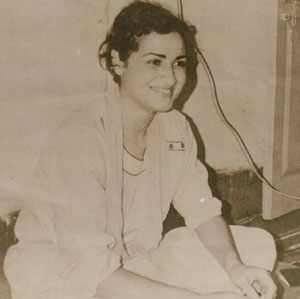


i also checked out rawa's (revolutionary association of the women of afghanistan) website - they were mentioned in the slideshow and have been active in the fight for womyn's rights and social justice since 1977... the short biography on rawa's founding leader, meena, murdered in 1987 is worth the read ...


no, i haven't changed my view on the burqa (unless you call firmly cementing my already-held-belief a change) - i certainly won't be signing that petition to aid the oppression of womyn...

Sunday, August 7, 2011

this womon ain't no lady...

being called 'lady' and the ensuing conversation with a couple of friends last week really frustrated, or should that be annoyed or disheartened me - perhaps all three - it's a word i never use because to me it's heavy with oppression...

when i'm called 'lady' i cringe - when i was growing up young womyn were supposed to act like young 'ladies' so we were constantly being told "ladies don't talk back" (opinionated womyn definitely weren't ladies!) - "ladies don't swear" - "ladies don't dress like ______" (insert your own term here - whore, slut, harlot - the antithesis of a lady!!) - "ladies don't smoke in the street" (because they looked 'cheap' - meaning whore, slut, harlot. etc.!!) - it was a constant litany of 'ladies don't do this', 'ladies don't do that'... hmmm, apparently ladies didn't do very much at all so who'd want to be one? everything i did when growing up (and still do) was very unladylike...

and the origin of the word...

"Lady begins in Anglo-Saxon or Old English as hlæfdige ‘bread-kneader’ being compounded of hlaf ‘loaf of bread’ + dige ‘female kneader.’ So the first lady was she who kneaded the bread. Lord is what is left from Old English hlaf -weard> hlaford =, hlāf ‘bread, loaf ‘+ weard keeper, guard (think of ward, wardrobe, guard, garden [place where you keep or guard plants?] ). So the lady kneaded the loaf of bread and the lord guarded the bread as master of the household." from http://www.billcasselman.com/wording_room/lord_lady.htm

there is consensus with this...

"c.1200, lafdi, lavede, from O.E. hlæfdige "mistress of a household, wife of a lord," lit. "one who kneads bread," from hlaf "bread" (see loaf) + -dige "maid," related to dæge "maker of dough" (see dey (1); also compare lord). The medial -f- disappeared 14c. Not found outside English except where borrowed from it." from online etymology dictionary

this last source also goes on:

"Sense of "woman of superior position in society" is c.1200; "woman whose manners and sensibilities befit her for high rank in society" is from 1861 (ladylike in this sense is from 1580s, and ladily from c.1400). Meaning "woman as an object of chivalrous love" is from early 14c. Used commonly as an address to any woman since 1890s."

it was something to 'aspire' to if you were from the lower socio-economic class...

"In the late 19th and early twentieth century, in a difference reflected in the British novelist Nancy Mitford's essay "U vs. non-U", lower class women strongly preferred to be called "ladies" while women from higher social backgrounds were content to be identified as "women." Alfred Ayer remarked in 1881 that upper middle class female store clerks were content to be "saleswomen," while lower class female store clerks, for whom their job represented a social advancement, insisted on being called "salesladies." These social class issues, while no longer as prominent in this century, have imbued the formal use of "lady" with something of irony (e.g.: "my cleaning lady," or "ladies of the night" for prostitutes)." from wikipedia

sadly, the word lady still appears to be in usage as a definer of womyn, a shackle to keep us in our 'place' - according to an article on ms magazine's blog - "who're you calling a lady?" by Leah Berkenwald - an american member of congress caused outrage just last month...


"This week, Rep. Allen West (R-FL) reminded American women that in order to be afforded due respect from him and ultra-conservatives like him, they need to act like ladies.

Democratic National Committee Chairwoman Rep. Debbie Wasserman Schultz (D-Fla.) had criticized Rep. West’s opposition to raising the debt ceiling:

"The gentleman from Florida, who represents thousands of Medicare beneficiaries, as do I, is supportive of this plan that would increase costs for Medicare beneficiaries, unbelievable from a Member from South Florida, slashes Medicaid and critical investments essential to winning the future in favor of protecting tax breaks for Big Oil, millionaires, and companies who ship American jobs overseas."

In response, Rep. Allen West sent a personal attack in the form of an email to Schultz cc’d to Congressional leadership. In it, he called the Congresswoman “the most vile, unprofessional, and despicable member of the US House of Representatives” and a “coward,” and told her to “shut the heck up.” Then he wrote this:

"You have proven repeatedly that you are not a Lady, therefore, shall not be afforded due respect from me!"

you can read the rest of the article here, but one of my favourite comments to the article was from a womon called sha:


"If you get right down to it, what he really means by being a “Lady” is being the under-educated, disenfranchised property of her husband with little to no interest or stake in the political process that governs her life and choices. We get it, you would love to return to the days of petticoats and lynch mobs, but it isn’t going to happen, so you better learn to dialogue with a woman who takes her job seriously and may even believe she is there for the people she represents. Radical, I know!"

nah, this womon ain't no lady!! (and i didn't think i'd ever get this post finished - it seems to have taken me all morning because my internet has kept dropping out - talk about pissed off - oooooh, how fucking unladylike!!!!


Sunday, July 24, 2011

whatever happened to...

good, old-fashioned common sense? or maybe that should read competence?

i mostly do my shopping at iga in st kilda... all of the staff are courteous, and most competent - but i shudder when i'm next in the queue if there's one particular young womon on one of the checkouts - iga's setup is that you just stand in one long queue until called - i watch with dread when i'm getting closer to being called and this particular cashier is getting closer to finishing with her customer...

i have to say here she is a lovely, friendly young womon - always very cheery and chatty (she's doing a creative writing course, hopes to be a writer some day) - but perhaps this is one of her 'problems' - chatting and not taking notice of what she's doing... her weighing of things leaves a lot to be desired - one day i was charged $16.99 for one bulb of garlic when she served me, and if you watch her closely (which i suggest you do) she just rests her hand on the scales while weighing! we weighed the garlic again and it came to $1.89! now that's a big difference - it's not like i've got money i can afford to pay out for nothing - shows the necessity for vigilance (similar 'mistakes' have happened in the past!)...

then there are the fruit and veg items she's unsure of - if you check your docket you'll notice a number of things that appear on it but aren't in your shopping bag - but you'll have other items that don't appear on the docket - pity you're mostly getting charged for more expensive items - apparently anything unrecognisable to her is exotic and costly! personally i prefer someone to ask me "what's this"! call me naive but i'd assume there'd be staff training in food identification if that's part of their job!!

another problem - packing... now i've noticed a few youngsters have a problem in this area - they put the bread and tomatoes and anything squashable into the bag first and anything heavy just goes right on top... what's that all about - surely common sense tells you heavy stuff first, soft squashy stuff on top!!!! is this the secret management plan to do away with staff packing bags altogether?

yeah, you can tell i had a bad supermarket moment today - i got that young womon, after being called to another checkout to be told the young lad couldn't serve me because i had a bottle of wine and he didn't 'have a licence to sell alcohol yet' - that was the first thing i put on the counter but he waited until i had unpacked my basket before telling me - that meant packing everything back up again and going to the end of a now much longer queue... i was really pissed off!!! i suggest if they can't swipe through the alcohol iga sells, instead of calling 'next', they need to qualify it with 'next customer without alcohol'!!!!

sorry, i just had to have that gripe...

and now i'm going to have a glass of that wine while i do some baking - a veggie pie and a chocolate cake - good old (vegan) comfort food! - and then i'm going to settle down and watch some movies - perhaps i'll watch "Splice", about genetic engineering, then maybe "Daybreakers", an australian produced vampire movie with claudia karvan, sam neill, ethan hawke and willem dafoe - should be interesting at the very least!

i'll leave you with an amy winehouse video - a very talented young womon with so much potential and such a beautiful, powerful voice - but sadly a troubled young womon addicted to crack cocaine and alcohol and surrounded by sycophants - dead at 27...  farewell young sister...


Monday, July 18, 2011

a little bit of sorcer-y...


nah, not that type of sorcery -   i'm talking this type of sorcer(y)... our new(ish) web 2.0 catalogue 'experience'...


what does it do? this, from the developers (civica) website... "SORCER is focused at the library patron and, by using a range of Web 2.0 concepts and tools, provides them with a personalized exploration of a library collection integrating social networking and other new features."


in other words it's a more visual, informative, interactive and customizable online library catalogue... i'm in the process of 'learning sorcer' - how to create the containers to display information in various formats - browse clouds, gallery displays, browse lists, etc... doesn't sound too hard does it? but it's like learning a whole new language...


have you ever played around in the template html of your blog? maybe viewed the source code of a web page? because it's that source code that i have to work within when creating one type of container...  this is the source code of the sorcer graphic and first paragraph above - and it's this sort of code that i have to become familiar with... granted, the wheel has already been invented in that there are containers already made that i can copy, paste and edit - but i still have to scan it, work out what needs to be kept, what gets added where, what to get rid of, find the right graphic and then format it to fit, then add it's location into the right place in the code... and then there's the containers that require boolean searching - it needs to be done right to get the right sets of results... all this gets done in a test database and then has to be transferred to the live system - all very 'focused' and 'fiddly' stuff - for me it is anyway - not so for the younger generation who have grown up with computers - guess they grew up with computer-speak their second language...


it is interesting stuff though, but it's been doing my head in all weekend just thinking over what i learnt on friday - i don't want to forget it! the memory doesn't have the same retention and recall it once did (access to the test database from home would be sooo good - the only place where total concentration can really be achieved!)... 

i had ideas of writing a post on a totally different topic - i'd been mulling over a couple of reports of disturbing trends from earlier in the week - but, as you can see, it didn't quite work out that way - perhaps next week...

Monday, July 4, 2011

a significant 60s struggle...


ever heard of dagenham? i certainly hadn’t – so i was totally oblivious to the major chapter of herstory written there in 1968…

well, oblivious until yesterday that is, when i watched a 2010 bbc movie – made in dagenham – a dramatization based on the struggle for equal pay and recognition as skilled workers by the female machinists at the dagenham ford factory…


in 1967 england there were effectively four grades of production workers...


the womyn were at the 'bottom of the ladder' and received only 87% of the unskilled male wage... the industry was rolling out a new classification structure which looked like this..

they were expecting recognition of, and proper remuneration for, their skills but when the industry reclassified their positions to an unacceptable category b, rather than the deserved category c (to which their male counterparts with equivalent skills were regraded) it was time to take action… 

machinists voting to strike in 1968


when ford refused to upgrade them, all 187 machinists walked out and stayed out for three weeks... they were joined by the 195 womyn at ford's halewood plant in merseyside, effectively bringing ford 'to their knees'... oh, i forgot to mention they were also fighting a hostile union in collusion with the ford management...


strikers meet with barbara castle


after meeting with barbara castle, then secretary of state for employment & productivity, negotiations resulted in an immediate 5% pay increase, taking them up to 92% of the male rate, rising to the full category b rate the following year... it wasn't the desired outcome of equal pay and recognition, but it was one they were prepared to accept in the interim...


these courageous womyn and their struggle were instrumental in bringing about the united kingdom's equal pay act of 1970... but their fight didn't end there - it took another 16 years to win the regrading!!!

by the way, i enjoyed the film... there are some inaccuracies, and a bit of 'poetic licence' applied... the main character in the movie, rita o'grady, is a composite character - but played well by sally hawkins... bob hoskins also does a good job as the shop steward... there are also a lot of beehives!!!! all in all it's entertaining and informative (and it inspired me to look for more information!!!)